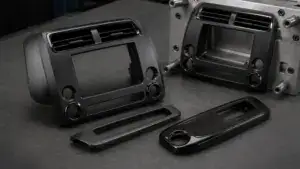
Two-shot molding, also called 2 shot, double shot or 2K injection molding, produces one part from two materials or two colors in a single molding cycle. A two-shot mold first molds the substrate, then moves it, by rotating the mold half or shifting a core, into a second cavity where the second material is injected over it and bonds to it. Moldie designs and builds two-shot molds as part of our plastic injection mold manufacturing.
Two Shot Molding Process
An injection molding machine is used in the two shot molding process where two materials are “over molded” in one molding cycle. The amount of material injected into the molding cavity is referred to as a “shot.”
In two shot injection molding, a first section is molded, and after it is complete, a second part is injected to create the molding’s final portion. Both pieces must be comparable (chemically) for the two shot molding process to be successful for bonding to take place.
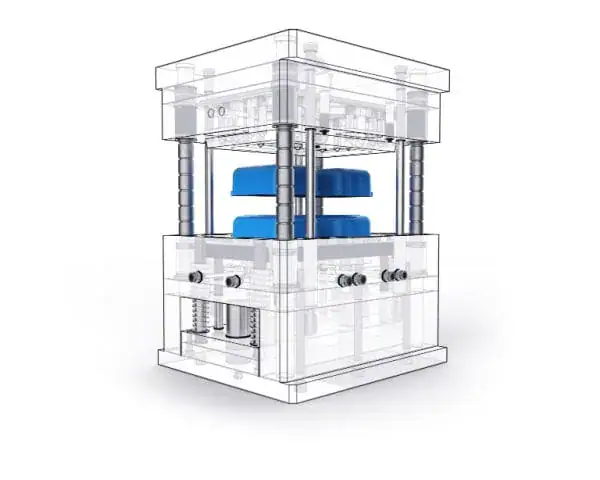
A part made of hard material can be joined to a part made of soft material using two shot injection molding. In a two cavity mold, the procedure combines the molding of two components. It can significantly improve the product’s appeal in terms of feel, color, etc. There are many different design possibilities with two-shot molding.
The two shot injection molding technique is divided into two steps. The first involves an injection of resin into a mold, which is then cooled to create a solid object, much like traditional injection molding.
The newly-molded object is transported to a second mold in the second stage using a rotating platen or a robotic arm. Depending on the design, the newly-molded part is then given a second injection of resin in, through, or around specific areas of the first mold.
Following the formation of a molecular link between the two plastic resins, the multi-resin molded object is cooled and expelled.
This process makes two shot molding ideal for switches, buttons, toothbrushes, and caps for containers.
Applications Of Two Shot Molding
For intricate, multiple colors, and multi-material plastic goods, especially in high-volume manufacturing circumstances, two shot injection molding is the best plastic molding technique.
In addition, the two shot molding process is applied in the automotive sector to make a wide range of products and parts. Other items made using the double shot process include lawn and garden tools and agricultural equipment.
Two shot molded parts are utilized in almost every industry, from consumer goods to construction, but they are most frequently used in situations needing the following:
- parts or components that can move
- rigid surfaces with flexible grips
- either acoustic dampening or vibration
- superficial explanations or identifications
- components with several materials or colors
Benefits Of The Two Shot Molding Process
Versatile
Product makers prefer two shot injection molding for a variety of applications, including automotive interior parts, medical equipment, tools, and toys. It enables manufacturers to mix a multitude of components and hues to produce a robust and aesthetically pleasing product.
Materials like silicone and thermoplastics, nylon and thermoplastic elastomers, or stiff nylon and soft touch materials are a few examples of materials that can be blended successfully with this procedure.
Cost Effective
The method produces more products each run for less money and requires fewer workers to produce the completed product since it uses a single machine cycle rather than multiple machine cycles. Additionally, it guarantees a solid binding between the materials, eliminating the need for later assembly.
High Product Quality
- Enhanced aesthetics. When products are made of different colored plastics or polymers, they look nicer and are more enticing to consumers. The product will appear more expensive if more than one color or texture is used.
- Better ergonomics. The method allows for soft touch surfaces; thus, the finished products can have handles or other ergonomically developed sections. This is crucial for tools, medical equipment, and other portable objects.
- The seal is improved when silicone polymers and other rubbery materials are used for gaskets and other parts that need a tight seal.
- The bond formed is incredibly strong, making the final product more robust, dependable, and long-lasting.
Part Consolidation
The number of parts in a finished assembly is decreased using two shot injection molding. Several components can be molded with a single tool, with no post-molding welding or joining. Fewer part numbers means less assembly, fewer suppliers and fewer separate tools to maintain.
Types Of Two Shot Molding Structures
Core Toggle Two Shot Mold
Because the mold’s core and cavity do not need to be relocated, the core toggle multi shot molding procedure is the simplest. Alternatively, shifting the slider will alter the geometry of the mold cavity.
Substance A is first injected into the cavity when the slider is in its expanded position during the injection molding process using the core toggle two shot mold. Then pulling the slider back to expose a new area of the cavity.
The remaining space is filled by moving the slider after material B is injected into the modified cavity through a different gate (above the middle nozzle).
Although the tool’s price increases when a slider is added to the mold, it can still be significantly less expensive than rotating platen or rotary shaft molds. Sadly, it is unable to make intricate, multicolored plastic pieces.
Rotary Platen Two Shot Mold
On the centerline of the platen, which parallels the axis of rotation, the mold core plate has two identical cores that are mirror images of one another. Two cavities with various geometries are included in the cavity plate attached to the fixed platen.
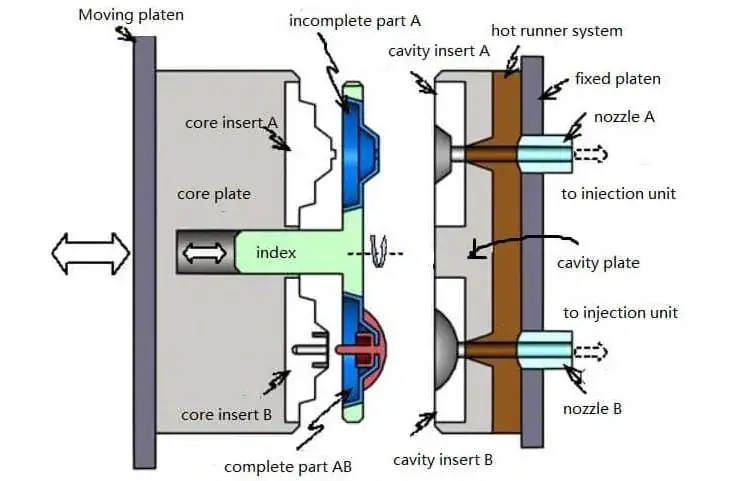
The rotary platen completes the switching of the molded pieces in each cycle, doing so without human switching.
The mold, which can hold more materials, is only seen here with the two materials. Depending on how much material is utilized, the rotating platen can be rotated by 90°, 120°, or 180°. A specific injection machine is also required to produce the necessary rotation on the core side.
Seesaw Two Shot Mold Structure
With one side moving up, the other side moving down, and so on, the slab structure is made up of two sides rotating around the center. Most keyboard mold designs with numbers and letters use the seesaw structure.
The structure contains closed numeric or alphabetic characters like 0, 4, 8, A, B, D, and O. The secondary material can only easily enter the confined region when a seesaw construction is used, creating a lovely appearance.
Cavity Sliding Structure
The male model cavity glides under the influence of the motor as the mold is opened after one injection. A specified distance is used to align the mold with the master mold before the second injection molding process.
Factors To Consider When Using Two Shot Molding
Material Selection
Physical, mechanical, chemical, thermal, electrical, flammability, and UV resistance are all important considerations when selecting a material for your component. Key questions include:
- What kinds of temperatures will your product be subjected to?
- How flexible or rigid do you need the material to be for bending?
- Will the component be exposed to UV rays, such as those found outside?
- Will the part be exposed to chemicals that will affect how well it works, especially over time?
Material Compatibility
The chemistry of the materials is crucial to take into account when deciding which ones to utilize for two-shot molding. While some materials bind imperfectly, others work well together and create a solid molecular adhesion.
Conduct an adhesion test before beginning manufacturing when the adhesive property of two compounds is unclear. When bonding is insufficient, fixes can be incorporated into the design, such as undercuts, grooves, or shoulders, to increase adhesion and lock the two compounds together.
A material compatibility table is reviewed to determine which polymers will cling to one another and which polymers are incompatible. Additionally, it eliminates the possibility of contamination, which is an issue when utilizing two different molds.
Shut Offs
To form holes, snap features, and lengthy through-holes, the mold closes these places to prevent plastic flow into those locations.
In these situations, the mold’s two halves seal against one another. Due to this, the sealing faces of the mold can open and close without colliding with one another. Three to five degrees should be the minimum draft angle. The longer the mold lives, the higher the clearing and the greater the draft.
Molecular Chemical Bonding
For a strong molecular bond to be possible, your substrate and second-shot resin should ideally be chemically compatible. The longest leg or surface area is ideal for the joint between the two resins. The second shot is nearly impossible to remove by selecting the ideal materials and joint design.
Even when a high-level chemical bond may be achieved, we highly advise using an appropriate mechanical bond if bonding is important to your application.
Gate Location
This is essential for producing solid surface cosmetics and a homogeneous mold. In single-shot injection molding, the melt can enter through the thickest part of the opening before flowing to the smaller areas, thanks to the gate’s placement.
Suggestions For Two Shot Molding
- Mold the rigid substrate first, the soft material second. Usually the rigid, higher-melt-temperature material is molded first and the softer, lower-temperature material such as TPE is molded second, so the second shot does not melt or deform the substrate.
- Run a mold trial before production. Test the mold to create a finished product before the actual production.
- Fix design risks before steel is cut (DFM). Before the mold is made, find all potential flaws and fix them.
- Account for the shrinkage of both materials. Generally speaking, the material that is initially created affects shrinkage.
- Let the first shot solidify before the second shot.
- Protect the substrate when it is transferred, so it is not damaged during molding.
- Give the substrate edge enough shut-off area to withstand the second injection pressure.
- Check the press’s injection units, pressure and cooling for the required flow rate and cooling capacity.
- Make the substrate strong enough for second-shot pressure.
Two-Shot Molding vs Overmolding vs Insert Molding
All three combine materials, but they differ in how the first part gets into the second cavity.
| Two-shot molding | Overmolding | Insert molding | |
|---|---|---|---|
| What goes in first | Plastic substrate molded in the same mold | Pre-molded plastic part | Metal or other pre-made insert |
| Machines / molds | One 2K press, one two-shot mold | Usually two molds, often two presses | One mold, insert loaded by hand or robot |
| Transfer | Automatic (rotary platen or core-back) | Manual or robotic | Manual or robotic |
| Best for | High volumes, tight bond lines, two colors | Lower volumes, lower tooling cost | Threads, pins, terminals in plastic |
Two-shot molds cost more to build, but at high volumes they remove a handling step and give a cleaner bond line. For low volumes, overmolding with two separate molds is often cheaper; for metal parts in plastic, see insert molding.
Two-Shot Mold Examples from Moldie
- Two-shot screwdriver handle mold: hard handle with contrasting elastomer grip zones.
- Multi-cavity two-color toothbrush handle mold: slim cores and synchronized cavity filling.
- Two-color measuring cup mold: main body plus a secondary grip material.

Looking specifically at tooling? Our guide to 2K molds and how we build them covers rotary, core-back and transfer 2K mold designs.
Have a two-shot part in mind? Contact us to discuss your mold.