An injection mold needs protection from two different risks during overseas shipping: corrosion and movement. Humidity and condensation can damage precision steel, while vibration and repeated lifting can shift a heavy tool inside its crate. Effective export packaging addresses both before the shipment leaves the factory.
At Moldie, packaging is the final step in handing an approved mold over to the customer. We combine inspection, surface protection, secure crating and clear documentation so the receiving team can unload, check and prepare the tool for installation.
What overseas mold packaging must protect against
| Shipping risk | Packaging response |
| Humidity and condensation | Clean and dry the tool, then use a suitable corrosion protection system. |
| Vibration and handling loads | Mechanically secure the mold to a load-bearing base and restrain movement. |
| Damage to exposed components | Protect connectors, fittings and vulnerable mechanisms. |
| Missing items or unclear handover | Label accessories and match the contents to the packing list. |
Agree on the shipping and receiving conditions
Before choosing the packaging, establish the complete journey from the factory to the molding facility. Include road transfers, port handling and any storage between delivery and installation. A short sea crossing followed by several weeks in a warehouse may require a different protection period from a shipment commissioned immediately on arrival.
Confirm who will receive the crate, what unloading equipment is available and whether access restrictions affect its size or orientation. If packaging costs, special protection or extended storage are part of the quotation, record those requirements early. This gives the customer, mold supplier and forwarder the same basis for planning the shipment.
1. Inspect and clean the mold before packing
Packing begins after the agreed sampling and inspection stage. We check the mold number, customer reference, cavity configuration and included accessories against the shipment list. Pre-shipment photographs record the condition of the tool before it is covered.
We remove resin residue, dirt and coolant traces from the areas requiring protection. Cavities, cores, parting surfaces, guide elements and accessible moving components need particular attention. Protective wrapping should enclose a clean, dry mold; sealing moisture inside can undermine the entire system.
2. Protect steel surfaces and control moisture
We apply a suitable rust preventive to exposed steel where required. The treatment must suit the steel, surface finish and expected transit or storage period. Polished cavities and appearance-sensitive surfaces also need a clear cleaning procedure before the next molding trial.
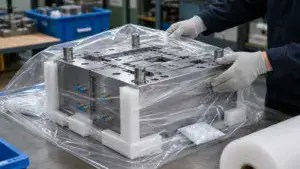
The outer protection is selected as a system. Vapor corrosion inhibitor film, commonly called VCI film, protects compatible metals within an enclosure. A moisture-barrier bag limits water-vapor entry, while desiccant absorbs moisture inside the sealed space. These materials serve different functions; ordinary stretch film should not be assumed to provide equivalent protection.
Where desiccant is used, its type and quantity should follow the packaging supplier’s guidance for the enclosure, barrier performance and expected duration. Compatible materials, intact seals and protection from punctures matter more than simply adding extra layers. Long storage after delivery should be included in the original packaging plan.
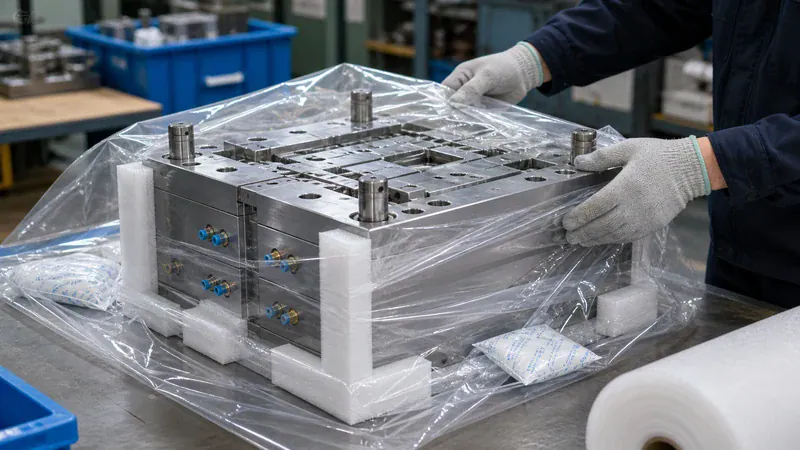
Cooling circuits and external surfaces need separate attention. A dry mold exterior does not establish that water has been removed from internal channels. Agree on the preparation of cooling, hydraulic and other service connections according to the mold design. Identify the protective materials used and explain which ones must be removed before commissioning. This information should travel with the tool so the receiving team does not have to guess how to prepare it.
3. Secure the mold and its accessories
Before crating, we secure moving and removable components according to the tool design. Transport locks or retaining devices must prevent unintended opening or movement without loading delicate working surfaces. Connections and protruding fittings are capped, covered or protected as appropriate.
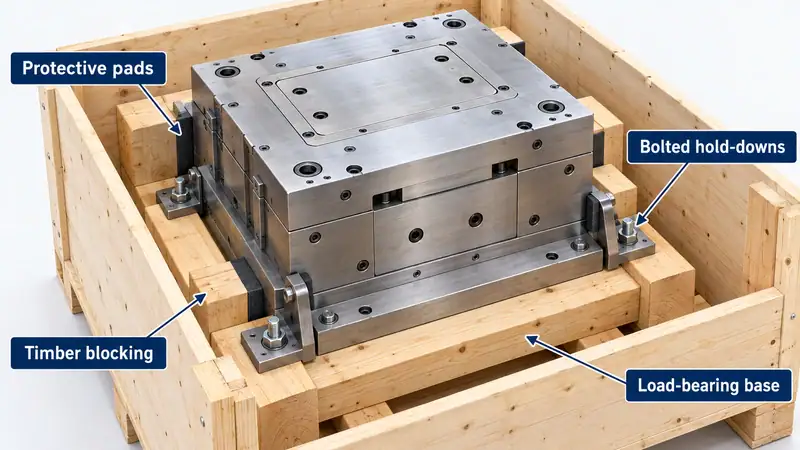
The mold is mechanically fixed through suitable mounting points to a base designed for its weight and center of gravity. Blocking and bracing restrict movement during handling. Foam protects against contact and abrasion, but the load must be carried by the base and mechanical restraints.
Spare inserts, fittings and other agreed accessories are labeled, packed separately and secured inside the crate. They should remain identifiable when the crate is opened and must not be able to strike the tool in transit.
Record the location of transport locks and removable restraints in the handover instructions, ideally with photographs. A lock that is easy to recognize during packing may be less obvious after the mold reaches another factory. The receiving team needs to distinguish temporary shipping restraints from components that belong on the tool during operation. Keep this identification consistent with the mold drawings and maintenance information.
4. Build and mark the export crate
The crate must suit the mold’s dimensions, gross shipping weight and handling method. Its base, fixings and access points need to work together for the planned forklift or crane operation. Markings identify the mold and customer reference, package dimensions, net and gross weights, and relevant orientation or handling instructions.
Wood packaging requirements also need attention. Where ISPM 15 applies, regulated solid-wood components require approved treatment and marking. Packaging made wholly from qualifying processed wood, such as plywood, is exempt under the standard; a plywood box can still contain regulated solid-wood skids or braces. Confirm the complete crate construction and destination requirements before dispatch.
5. Verify the handover before dispatch
We check the completed package against the packing list and prepare the documents agreed for the project. These may include the commercial invoice, mold information, spare-parts list, maintenance instructions and approved sampling or inspection records. Sharing documents and packing photographs in advance helps the customer plan receiving and unloading.
- Mold identity, approval status and accessory quantities match the shipment record.
- Protected surfaces are dry, and the selected wrapping is intact.
- The tool, moving components and accessory boxes are secured.
- Crate construction, markings, dimensions and weights are checked.
- The receiving team has the documents and handling information it needs.
Photographs are most useful when they show the stages that will become hidden. Capture the mold identification, protected surfaces, accessory labels, base fixings and completed crate. A final photograph of a closed box cannot show how the tool was restrained inside. Link the images to the same mold reference used on the packing list so the customer can find the relevant record quickly.
What to check when the mold arrives
Photograph the crate before opening and inspect for impact damage, water entry or displaced restraints. Check the mold and accessories against the packing list, and report discrepancies promptly with photographs. Retain the packaging if damage needs investigation.
Before installation, follow the mold-specific instructions for removing transport locks and preservatives, inspecting connections and preparing the cooling and moving systems. If the tool will remain in storage, keep its protection intact and confirm that the storage conditions and duration remain within the packaging plan.
If the crate is opened for inspection before installation, review the condition of the protective enclosure before returning the tool to storage. A cut bag or displaced seal changes the protection arrangement. Ask the supplier how to restore it for the remaining storage period rather than assuming the original preparation still applies.
Plan your mold shipment with Moldie
Share your mold size, weight, destination and shipping method with Moldie before dispatch. We can prepare a packaging and delivery plan that matches your tooling, transit conditions and receiving requirements. Contact Moldie to discuss your project.