As the demands for modern rail transit vehicles increase, traditional materials in rail interior applications such as steel, aluminum, and plywood show clear limitations. This is the reason why rail interior plastics have become essential to how modern passenger and freight rail vehicles are designed, built, and maintained.
On the topic of plastic parts for rail interiors, this article will cover the possible applications, materials, compliance factors, and what matters the most: how to verify whether a manufacturer is qualified or not.
We hope Moldie’s experience in train parts manufacturing will help you achieve your new builds goals or fleet refurbishment programs!
Where Are Rail Interior Plastics Used
Rail interior plastic parts can be installed inside a rail vehicle’s passenger cabin, operator cab, enclosed service zone, or other areas. These parts range from large thermoformed panels to small injection-molded clips and housings, and they serve structural, aesthetic, and functional roles across virtually every rail platform in operation today.
Common Interior Parts In Rail Vehicles
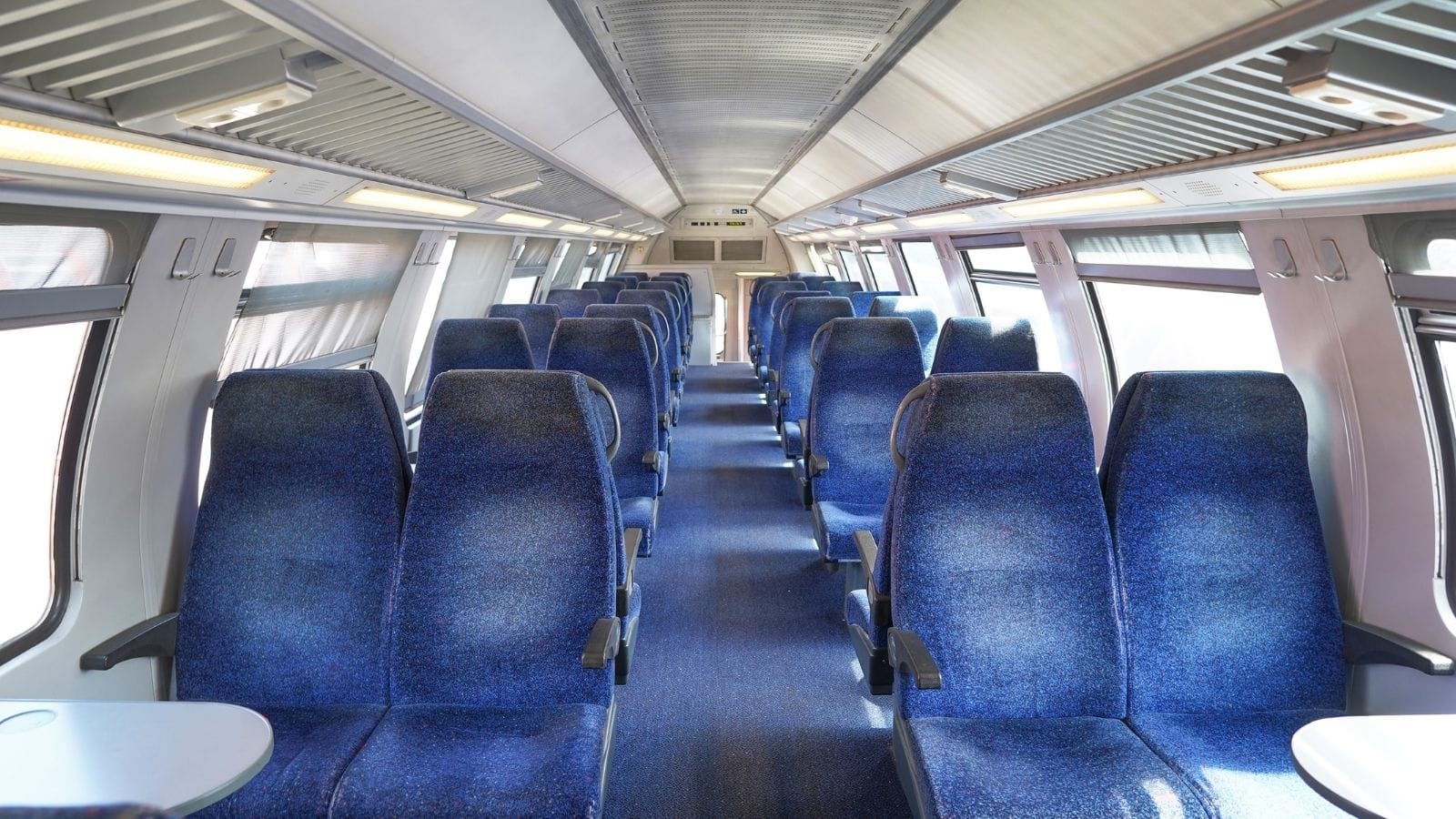
The list of plastic interior components found in modern rail vehicles is extensive, so here is a chart to briefly show you some possibilities of injection-molded train parts.
|
Functional Category
|
Specific Plastic Components
|
Primary Manufacturing Focus
|
|---|---|---|
|
Structural Paneling & Cladding
|
• Ceiling panels and ceiling cove sections
• Wall cladding and partition panels • Flooring systems and floor edge trims • Door threshold covers |
High dimensional stability, and structural integrity.
|
|
Passenger Rail Seating & Amenities
|
• Seat shells, seat backs, and armrests
• Tray tables and magazine holders • Luggage rack components |
Injection molding for high-volume ergonomics, impact resistance, and anti-vandalism.
|
|
Utilities & Climate Control (HVAC)
|
• HVAC duct covers and air distribution grilles
• Cable management trays and conduit housings |
Heat resistance, optimal airflow design, and electrical insulation properties.
|
|
Visibility & Lighting
|
• Window frames and window masks
• Light diffusers and LED housings |
Precision CNC machining or molding for optical clarity and seamless integration.
|
|
Specialty Modules & Cab Areas
|
• Toilet module enclosures
• Driver cab linings and instrument panel surrounds |
Complex multi-part assembly, chemical resistance (for sanitation), and ergonomic control access.
|
Typical Rail Platforms and Service Environments
Rail interior plastics are used across a wide range of vehicle types, namely:
- Light rail and metro cars: They see high passenger turnover, which often emphasizes scratch resistance, cleanability, and vandal resistance.
- Regional and intercity high-speed rail: These trains require components that maintain appearance and performance over longer service intervals.
- Locomotives and driver cabs: Their interiors often demand plastics with strong electrical insulation properties and resistance to vibration.
- Freight wagons: They use plastic components primarily for insulation, cable routing, and protective housings.
Why Rail Interior Plastics Matter for Performance
The shift to injection molding in rail interiors is driven by measurable performance advantages across weight, durability, safety, and operating cost. These benefits are not theoretical; they show up in energy consumption data, maintenance logs, and compliance testing results.
Weight Reduction and Fuel Efficiency Benefits
The weight reduction of a single plastic part may not be significant compared to metal or wood counterparts, but if all the components add up, components with engineered thermoplastics or composites can reduce the mass of interior systems by 20 to 40 percent in many cases.
This will greatly reduce the energy and fuel required to accelerate and maintain the speed of trains. Across a fleet of vehicles operating over a 30-year service life, the cumulative savings are significant.
What’s more, lighter vehicles also reduce wear on wheels, rails, and braking systems, creating secondary maintenance savings.
Reliability, Durability, and Reduced Maintenance
Plastics do not rust, and they resist the galvanic corrosion that occurs when dissimilar metals are joined. This is especially important in rail environments where components are exposed to moisture, cleaning chemicals, and temperature cycling.
Thermoplastic interior panels maintain their dimensional stability and surface appearance over years of daily use, ensuring both functions and aesthetics. Composite seat shells resist cracking under repeated load cycles, and cable management components made from engineering polymers retain their electrical insulation properties without degradation.
The result is fewer unscheduled repairs, longer intervals between refurbishments, and lower total cost of ownership.
Fire Safety with Specialized Plastics
Fireproof is the most important parameter in terms of safety features in this scenario because the enclosed space in a train cabin can become deadly fast when a fire breaks out.
Modern rail-grade polymers are engineered to be self-extinguishing, meaning they stop burning when the ignition source is removed. They also produce far less smoke and lower levels of toxic gases compared to many legacy materials.
Insulation Performance for Safety and Comfort
Beyond fire safety, plastics contribute to better passenger experience through thermal and acoustic insulation. Foam-core composite panels reduce noise transmission from the exterior environment and from underfloor equipment. Polymer-based flooring systems provide slip resistance and can integrate radiant heating elements.
Electrical insulation is another critical function. Plastic housings, conduit systems, and insulator components protect wiring and electrical systems from contact, moisture ingress, and short circuits.
Materials Used In Rail Interior Plastic Components
Material selection for rail interior plastics involves balancing mechanical performance, fire behavior, processability, surface quality, and cost. The right material depends on the specific component, its location within the vehicle, the expected service loads, and the applicable fire safety classification.
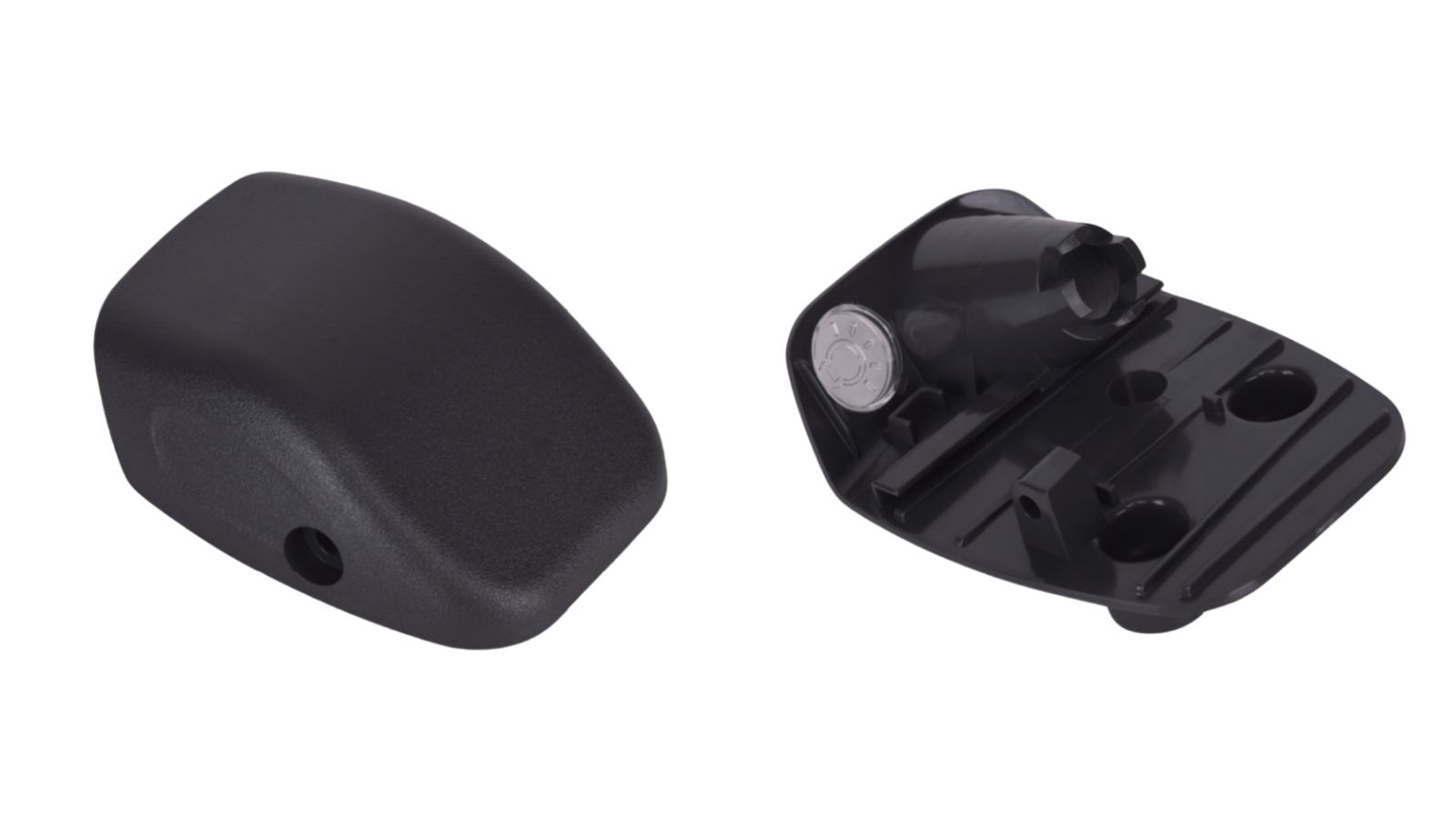
Thermoplastics For Formed And Molded Interior Parts
The most common choices are
- Polycarbonate (for impact resistance and clarity in windows/light covers)
- ABS (for trim, housings, and armrests with excellent surface finish)
- Glass fiber reinforced composites (for structural panels and seating where high strength-to-weight matters)
For specific applications, your manufacturer should recommend the right material based on your component’s location, structural role, and fire classification requirement.
Composite Materials for Strength and Stability
Fiber-reinforced polymers (FRP) are used where higher structural performance is needed. Glass fiber reinforced polyester (GRP) and sheet molding compound (SMC) are common in seat shells, partition walls, toilet modules, and large panel assemblies.
These composites offer excellent strength-to-weight ratios and can be molded into complex three-dimensional shapes with integrated mounting features. Carbon fiber reinforced composites appear in some high-performance applications, though cost limits their widespread adoption in standard interiors.
Sandwich-core panels, which combine thin composite face sheets with a lightweight foam or honeycomb core, are used for ceiling and wall systems where stiffness and low weight are both priorities.
How Fire Safety Standards Shape Material Selection
In a previous section, we mentioned how important fire safety is in the rail industry, but how do we evaluate them? The answer is a series of major quality standards set up by authorities around the globe.
In Europe, EN 45545-2 is the primary standard, classifying materials based on flame spread, heat release, smoke density, and toxicity of combustion gases.
In the United States, the equivalent framework is built around 49 CFR Part 238 and NFPA 130, with material fire performance tested against ASTM E162 (flame spread) and ASTM E662 (smoke density).
These standards impose stringent requirements on materials and production, therefore eliminating many commodity-grade plastics from consideration. This calls for a capable manufacturer with wide market connections to source the special materials and corresponding production techniques to process them.
To be more specific, these materials often include halogen-free flame retardant grades or inherently flame-resistant polymers like certain polycarbonates and PEI (polyetherimide) and other specially formulated composite resins.
How To Choose A Manufacturing Partner For Rail Interior Plastics
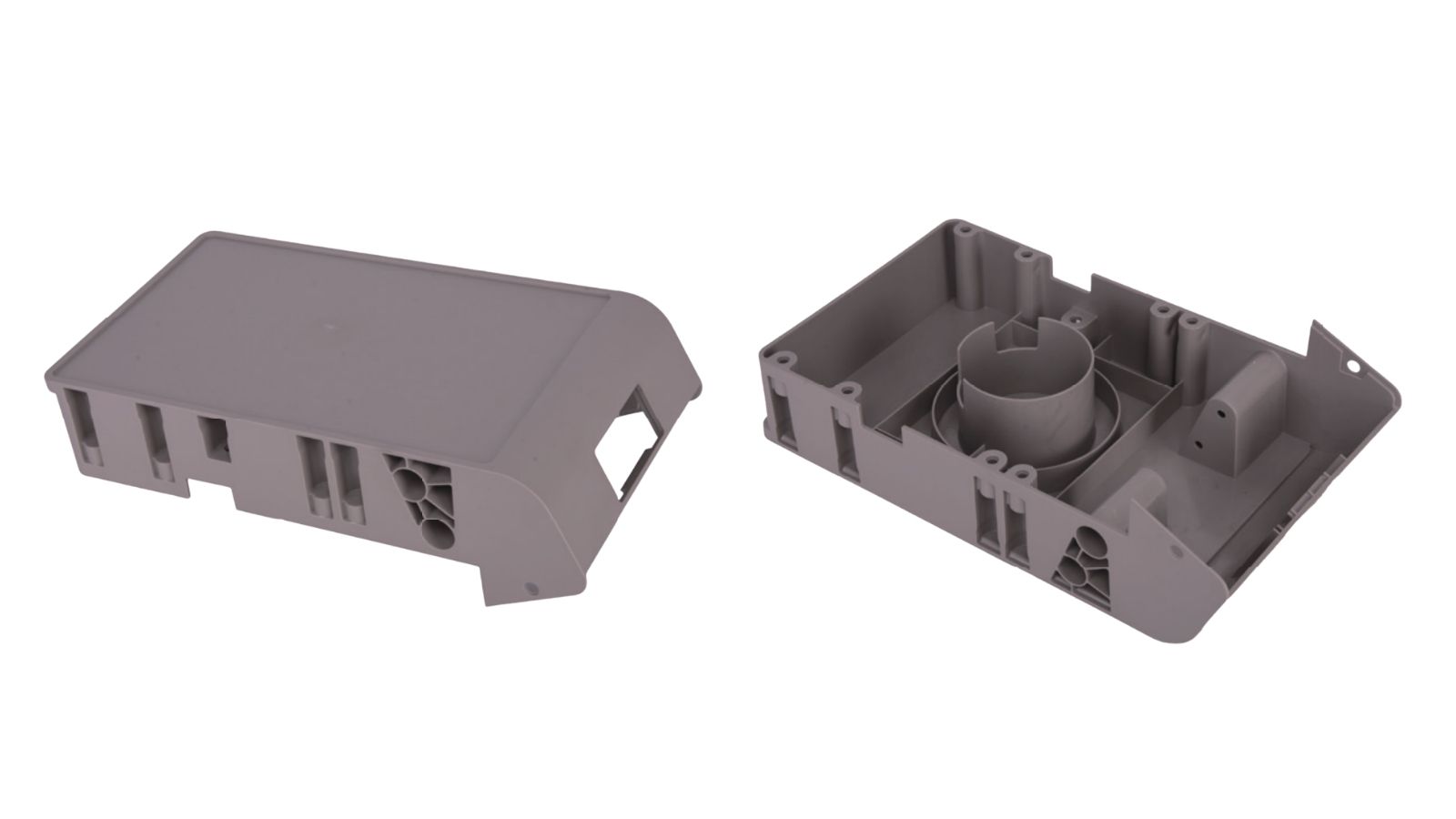
There are some important criteria to focus on when you assess an injection molding service provider of plastic train parts:
1. Technical and Material Sourcing Capabilities
Your partner should handle the processes and materials your project requires. Check their product catalog for examples of similar rail parts work and proof for in-house tooling and mold design/production.
2. Quality documentation
Rail programs require documented traceability at every stage. Expect first-article inspection (FAI) reports, dimensional data from trial runs, material certifications, and fire test documentation.
3. Turnkey support
A partner that can provides turnkey solutions that handle design feedback, tooling, production, finishing, assembly, and logistics will essentially eliminates vendor coordination headaches and compresses timelines are your best choice.
4. Flexible MOQ Support
What’s special about rail parts projects is that they often involve drastically different production volumes and varied designs. A good manufacturing partner should accommodate this variability and handle 500-unit prototype runs as easily as 5,000-unit production orders.
Partners who embrace flexibility are better aligned with rail programs, which demand long-term collaboration and responsiveness.
Explore Moldie’s Extensive Train Interior Parts Production Experience
Rail interior plastics deliver measurable gains in weight reduction, fire safety, durability, and passenger comfort. Getting these benefits right requires a manufacturer who can support your project from tooling through final delivery.
Moldie has the experience, in-house tooling capability, and quality documentation processes to support your need for high quality plastic train interior parts. With flexible MOQ support that handles everything from prototype runs to full-scale production orders, Moldie is built to match the varied demands of real rail programs.
Contact Moldie today to discuss your project requirements and get a tailored proposal!