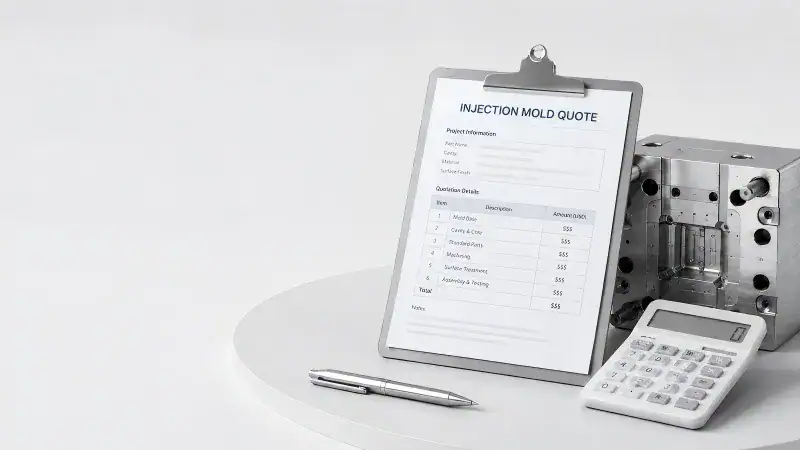
The lowest injection mold quotation is not always the lowest-cost solution. A price difference can reflect a different steel grade, mold life, cavity count, hot-runner scope, validation plan or level of engineering support. If those differences are not visible, buyers may compare quotations that describe fundamentally different tools.
This guide explains how to review an injection mold quote line by line and how to identify exclusions that can become additional costs after the purchase order.
Start by Confirming a Common RFQ Baseline
Before comparing prices, confirm that every supplier received the same:
- 3D model and drawing revision.
- Resin grade and shrinkage assumptions.
- Annual and lifetime volumes.
- Mold-life requirement.
- Surface and appearance specification.
- Critical tolerances.
- Machine and mold-interface standards.
- Trial, inspection and documentation requirements.
- Delivery destination and Incoterm.
If suppliers quote different assumptions, normalize the scope before making a commercial decision. Our injection mold RFQ checklist can help you prepare a consistent package.
1. Mold Type and Number of Cavities
The quotation should state whether the tool is single-cavity, multi-cavity, a family mold, two-shot mold or another configuration. Cavity count affects output, mold size, runner design, balancing, machine selection and maintenance.
Ask why the proposed cavity count is suitable for your annual demand. A more expensive multi-cavity tool may reduce the unit cost, but it is only worthwhile when forecast volume and production capacity support the investment.
2. Mold Base and Insert Steel
“Steel mold” is not a sufficient specification. The quotation should identify:
- Mold-base material.
- Core and cavity insert steel.
- Hardness and heat treatment.
- Steel used for slides, lifters and wear components.
- Corrosion-resistant or high-polish requirements.
Steel selection should reflect part volume, resin abrasiveness, cosmetic requirements and expected mold life. A glass-filled material can require different wear resistance from an unfilled commodity resin. Moldie engineers evaluate these factors as part of our mold design and engineering process.
3. Expected Mold Life
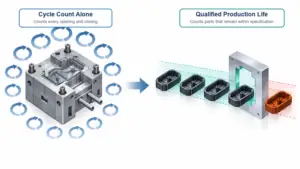
Compare the warranted or expected cycle life, not just the initial price. Ask suppliers to clarify:
- Cycle-life target.
- Conditions attached to the warranty.
- Required preventive maintenance.
- Components excluded from the warranty.
- Responsibility if the mold runs at another facility.
- Availability of spare and replacement components.
A low-cost tool designed for limited production should not be compared directly with a hardened high-volume mold.
4. Runner and Gate System
Confirm whether the quote includes a cold runner, hot runner or valve-gate system. For a hot runner, verify:
- Brand and model.
- Number of drops.
- Controller inclusion.
- Spare heaters and thermocouples.
- Manifold warranty.
- Installation and service support.
Hot runners may reduce runner waste and support automation, but they add purchased-component cost and maintenance requirements. The right choice depends on resin, part quality and lifetime economics.
5. Slides, Lifters and Other Mold Actions
Undercuts may require slides, lifters, collapsible cores, unscrewing mechanisms or removable inserts. The quote should describe the proposed method and whether activation is mechanical, hydraulic or pneumatic.
Ask whether cylinders, switches, connectors and other external components are included. A simple manual insert may lower tooling cost but increase labor and cycle time during production.
6. Cooling and Cycle-Time Assumptions
Cooling often controls the molding cycle. Compare:
- Proposed cooling layout.
- Use of baffles, bubblers or conformal cooling.
- Mold-temperature requirements.
- Quoted or estimated cycle time.
- Whether the cycle-time target is guaranteed or only estimated.
The cheapest mold can become the most expensive production solution if poor cooling adds several seconds to every cycle or creates dimensional variation.
7. DFM, Moldflow and Design Reviews
Engineering should appear as a defined deliverable. Check whether the quote includes:
- DFM analysis.
- Moldflow simulation when required.
- 2D mold layout.
- Full 3D mold design.
- Customer design-review milestones.
- Cooling, ejection and gate review.
- Mold drawings and bill of materials at completion.
Moldie integrates customer requirements through CAD/CAM/CAE and provides structured engineering support before and during tool construction. See How We Work for an overview.
8. Mold Trials and Sample Quantities
The quotation should state how many trials and samples are included. Clarify:
- T0, T1 and additional trial scope.
- Trial resin responsibility.
- Sample quantity at each stage.
- Trial reports and molding parameters.
- Freight for samples.
- Cost of trials after the included allowance.
- Responsibility for corrections caused by tooling versus part-design changes.
Without this definition, an apparently low tooling price can accumulate trial and modification charges later.
9. Inspection and Validation
Compare the quality deliverables included with the mold:
- Full-dimensional report.
- CMM or 3D scanning report.
- Material certificates.
- Steel certificates and hardness records.
- Process capability studies.
- First Article Inspection or PPAP.
- Appearance approval samples.
- Mold-trial video and photographs.
For critical projects, specify the inspection standard, sample size and report format in the RFQ.
10. Lead Time and Milestones
A single number such as “eight weeks” is not enough. Ask for milestone dates covering:
- DFM submission and approval.
- Mold design review.
- Steel ordering.
- Completion of machining and assembly.
- First trial.
- Sample correction.
- Final acceptance.
- Shipping.
Also clarify when the schedule begins. Some suppliers count from purchase order, while others count from deposit, final data release or design approval.
11. Packaging, Shipping and Tool Handover
Confirm whether the quoted price includes:
- Rust prevention and export packaging.
- Mold clamps or transport bars.
- Water, electrical and hydraulic connectors.
- Spare components.
- Lifting instructions and mold data plate.
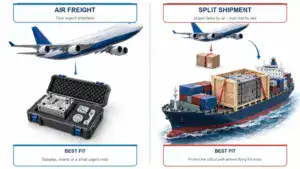
- Shipping to the named destination.
- Final 2D/3D mold drawings.
- Bill of materials and maintenance manual.
If the mold will be exported, verify that it meets the receiving plant’s standards before shipment.
12. Payment Terms, Warranty and Change Management
Review the commercial conditions as carefully as the technical scope. Important points include:
- Deposit and milestone payments.
- Final-payment trigger.
- Ownership of the mold and design data.
- Warranty period and conditions.
- Storage and maintenance responsibilities.
- Engineering-change pricing.
- Cancellation terms.
- Confidentiality and intellectual-property protection.
Define how changes are approved. A controlled change process should describe the technical change, price, schedule effect and new drawing revision before work proceeds.
Need a second opinion on a tooling approach? Moldie can review your part data, volume, resin and quality requirements and prepare a transparent mold proposal. Explore our plastic injection mold manufacturing capabilities or request a quote.
Compare Total Cost, Not Only Tool Price
The correct commercial comparison includes both tooling and production. Consider:
- Mold price.
- Expected maintenance and spare parts.
- Cycle time and cavities.
- Scrap and runner waste.
- Labor and secondary operations.
- Resin consumption.
- Downtime risk.
- Validation and documentation.
- Freight and import costs.
- Expected unit price at forecast volumes.
For example, a higher-priced tool with more effective cooling, balanced filling and reliable automation may generate a lower cost per acceptable part over the program life.
Warning Signs in an Injection Mold Quote
Investigate a quotation further when it contains:
- No drawing or revision reference.
- No defined steel grades or hardness.
- No mold-life statement.
- No cavity or runner description.
- An unusually short lead time without milestones.
- Unlimited assumptions about tolerances or appearance.
- No trial or inspection scope.
- No explanation of exclusions.
- A unit price without resin, packaging or volume assumptions.
- Unclear ownership or warranty language.
These issues do not automatically disqualify a supplier, but they must be resolved before the order.
Frequently Asked Questions
Why do injection mold quotations vary so much?
Prices vary because suppliers may propose different mold structures, steels, cavity counts, components, validation scopes and production assumptions. Location and equipment also affect price, but technical scope is often the main reason for large differences.
Should buyers select the lowest mold price?
Not automatically. Select the solution that meets the required quality, capacity, mold life and delivery target at the best total cost. A low initial price can lead to higher unit cost, maintenance or modification expense.
Should part price be quoted with the mold?
Yes, when the supplier will also mold production parts. Request part prices at several annual volumes and make the resin, cycle time, cavity count, packaging and secondary-operation assumptions visible.
What should be fixed before issuing a purchase order?
The approved scope should include the latest drawings, mold specification, steel, cavities, runner, design deliverables, trial plan, quality documents, schedule, payment terms, warranty and delivery conditions.
Request a Transparent Mold Proposal
A professional injection mold quote should make the proposed engineering solution easy to understand. When scope and assumptions are visible, buyers can compare suppliers fairly and prevent expensive surprises after tooling starts.
Moldie provides engineering, injection mold making and custom injection molding under one coordinated project process. Send us your 3D model, drawing, resin, volume and quality requirements through the Moldie contact page for a customized proposal.