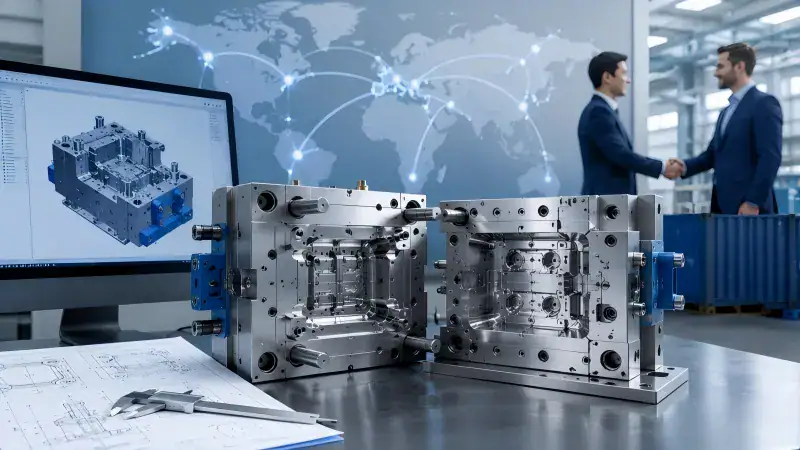
Choosing an overseas mold manufacturer is not simply a search for the lowest tooling price. The supplier will translate your product data into a production tool, manage engineering decisions, respond to design changes and often support molding for years. A weak decision can result in repeated trials, missed launch dates, unstable parts or a mold that cannot run reliably in the intended factory.
The following 12 questions help sourcing managers and engineers evaluate a mold maker before issuing a purchase order.
1. Do You Design and Manufacture Molds In-House?
Ask which activities are performed internally and which are outsourced. Important capabilities include:
- DFM and Moldflow analysis.
- 2D and 3D mold design.
- CNC milling and turning.
- EDM and wire EDM.
- Grinding, fitting and polishing.
- Mold assembly and trials.
- Dimensional inspection.
- Injection molding or die-casting production.
Outsourcing is not automatically a problem, but the supplier should explain how external work is controlled. In-house engineering and trial capabilities can shorten feedback loops and make problem solving more direct.
Moldie combines mold design and engineering with precision injection mold manufacturing and production support.
2. Have You Built Similar Parts and Molds?
Relevant experience reduces technical risk. Ask for examples with similarities in:
- Part size and projected area.
- Resin and reinforcement.
- Surface finish.
- Tolerance.
- Undercuts and mold actions.
- Cavity count.
- Hot-runner system.
- Annual production volume.
- Industry documentation.
Do not rely only on photographs. Ask the supplier to explain the engineering challenge, mold solution and validation result. Confidential customer information can remain protected while still demonstrating technical knowledge.
3. What Information Do You Need to Prepare a Reliable Quote?
A capable supplier should request more than a 3D model. Expect questions about material, volume, mold life, machine interface, appearance, tolerances, inspection and delivery.
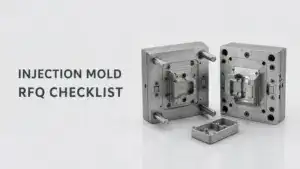
If a supplier produces an immediate fixed quotation without reviewing these items, ask which assumptions were used. Our detailed injection mold RFQ checklist explains the information needed for a comparable proposal.
4. What Will Be Included in the DFM Review?
The DFM process should identify issues before steel is cut. Ask whether the report covers:
- Draft and wall thickness.
- Undercuts and side actions.
- Parting line.
- Gate type and location.
- Ejection.
- Weld lines and air traps.
- Sink and warpage risks.
- Surface and appearance restrictions.
- Proposed product changes.
Clarify whether Moldflow analysis is included or recommended. Also ask how comments are recorded and approved. Moldie’s project workflow integrates customer input with CAD/CAM/CAE, mold design, trials and dimensional reporting.
5. How Do You Control Mold Design and Engineering Changes?
The supplier should have a controlled review process. Ask:
- Who is responsible for the mold design?
- When will 2D and 3D designs be submitted?
- Which stages require customer approval?
- How are drawing revisions tracked?
- Can work begin before design approval?
- How are engineering changes quoted and scheduled?
- Will final mold drawings and a bill of materials be provided?
Never rely on informal messages for significant changes. Each change should identify the revision, technical effect, price, timing and approval.
6. How Do You Verify Mold and Part Quality?
Ask to see the supplier’s inspection equipment and standard reporting. Depending on the project, quality control may include:
- Incoming steel and component inspection.
- Hardness and material certificates.
- In-process dimensional checks.
- CMM inspection.
- 3D scanning.
- Full-dimensional sample reports.
- Process-parameter records.
- First Article Inspection.
- Capability studies or PPAP.
The inspection method should match the drawing requirements. A list of equipment is useful, but a sample report often gives a better indication of how clearly results are communicated.
7. Can You Trial the Mold Under Representative Conditions?
A mold should be evaluated using the intended resin, machine range, mold temperature and process conditions. Ask:
- What trial equipment is available?
- Who supplies production resin and inserts?
- How many trials and samples are included?
- Will trial parameters and videos be provided?
- How are dimensions and appearance reviewed?
- What happens when the customer changes the design after a trial?
If the mold will be exported, confirm that the trial machine is reasonably representative of the receiving plant’s machine.
8. How Will You Manage the Project and Communicate Progress?
Overseas projects require disciplined communication. Ask whether you will have a dedicated project manager and how often progress will be reported.
A useful report normally covers:
- Current project status.
- Completed work.
- Photographs of machining and assembly.
- Open technical questions.
- Risks and required customer decisions.
- Upcoming milestones.
- Updated trial and delivery dates.
Agree on the working language, meeting cadence, response expectations and escalation contact before the order.
9. What Is the Realistic Tooling Schedule?
Ask for a milestone schedule rather than one overall lead-time number. It should include:
- DFM and customer review.
- Mold design and approval.
- Material procurement.
- Machining.
- Assembly.
- First trial.
- Measurement and sample delivery.
- Corrections and additional trials.
- Final acceptance and shipping.
The supplier should also state when the schedule begins and which customer approvals can affect it.
10. Can the Mold Run in My Production Facility?
If the tool will be exported, provide your mold and machine standards. Verify:
- Maximum mold size and weight.
- Tie-bar spacing and platen dimensions.
- Locating ring and sprue radius.
- Nozzle interface.
- Ejection arrangement.
- Clamp slots or bolt pattern.
- Electrical voltage and connectors.
- Water, hydraulic and pneumatic fittings.
- Hot-runner controller compatibility.
- Mold lifting and safety requirements.
Ask whether the supplier has previously exported molds to your country or production standard.
11. Who Owns the Mold, Data and Intellectual Property?
The commercial agreement should define:
- Ownership of the mold after payment.
- Ownership and permitted use of product data.
- Confidentiality obligations.
- Access to final mold drawings.
- Right to move or export the mold.
- Storage conditions and fees.
- Restrictions on producing parts for other customers.
- Treatment of customer-supplied inserts and gauges.
Use an NDA where appropriate and identify confidential files before sharing them.
12. What Happens After Final Approval?
Support after approval is an important supplier-selection factor. Ask about:
- Warranty terms.
- Preventive maintenance.
- Spare components.
- Repair response.
- Support if the mold is transferred.
- Production molding capability.
- Secondary operations and assembly.
- Long-term spare-part production.
A supplier that can support both tooling and custom injection molding can take responsibility for the relationship between mold design, process conditions and part quality.
Evaluating a new mold supplier? Send Moldie your part files and project requirements. Our engineering team can review manufacturability, recommend a tooling approach and prepare a project proposal. Contact Moldie.
A Practical Mold Supplier Scorecard
Use a weighted scorecard so price does not dominate the decision. A typical evaluation can include:
| Category | Suggested Weight |
|---|---|
| Engineering and similar-project experience | 20% |
| Quality system and inspection | 15% |
| Tooling and trial capability | 15% |
| Technical proposal and mold life | 15% |
| Project management and communication | 10% |
| Lead time and capacity | 10% |
| Total cost | 10% |
| Warranty and after-sales support | 5% |
Adjust the weights for your program. A prototype tool may prioritize speed and flexibility, while an automotive production mold may prioritize validation, repeatability and long-term support.
Warning Signs to Investigate
Pause and ask for clarification if a potential supplier:
- Quotes without confirming material, volume or tolerances.
- Will not identify mold steel or major components.
- Cannot provide a DFM or design-review process.
- Provides no inspection-report examples.
- Offers an unrealistic schedule with no milestones.
- Does not define trials, corrections or acceptance.
- Uses unclear mold-ownership language.
- Cannot explain how outsourced work is controlled.
- Avoids questions about warranty or mold transfer.
One warning sign may have a reasonable explanation. Several unresolved issues indicate higher project risk.
Frequently Asked Questions
Is a factory audit necessary?
For strategically important or high-value tooling, an audit is strongly useful. It verifies equipment, capacity, quality processes, project controls and whether the facility matches the supplier’s presentation. A remote audit can be used when an in-person visit is not practical.
Should I order a small mold first?
A pilot project can evaluate engineering, communication and sample quality before awarding a larger tooling package. Choose a representative project rather than one so simple that it does not test the supplier’s core capabilities.
How can I compare overseas mold quotes fairly?
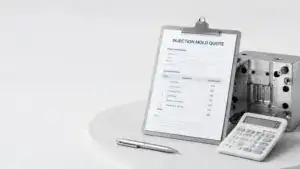
Issue the same RFQ and mold specification to each supplier, then normalize steel, cavities, runner, trials, validation, shipping and warranty. See our guide on how to review an injection mold quote.
Is certification enough to prove capability?
Certification is useful evidence of a management system, but it should be evaluated together with technical experience, sample reports, equipment, project controls and customer references.
Choose a Manufacturing Partner, Not Only a Tool Price
The best overseas mold manufacturer should make technical decisions visible, communicate risks early and support the tool through validation and production. A structured evaluation reduces uncertainty and helps protect launch timing, part quality and total program cost.
Founded in 2008, Moldie provides OEM/ODM support across engineering, mold making, trials and production. Explore our injection mold making capabilities or submit your project for an engineering review and quotation.