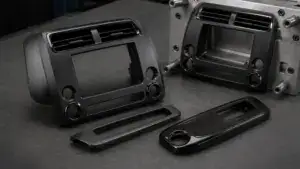
From surgical tools to device housings, medical injection molding shapes many of the plastic parts used in healthcare today. Due to the nature of its applications, the medical injection place strict requirements on its production process. This blog aims to make you understand why medical molding demands higher standards than other plastic processes and what to look for when choosing your partner in injection molding.
The Rigorous Demands of Medical-Grade Injection Molding
Medical injection molding operates under strict regulatory control and detailed validation. Manufacturers must prove that their injection molding process produces safe, repeatable parts with full documentation and traceability.

Medical Device Injection Molding vs. Conventional Molding
Medical device injection molding follows far tighter controls than conventional molding used for consumer or industrial goods.
In standard molding, teams often focus on cost, speed, and basic dimensional checks. In medical plastic injection molding, they focus on patient safety, regulatory compliance, and documented proof of control.
Key differences include:
| Conventional Molding | Medical Device Injection Molding |
|---|---|
| Basic quality checks | Validated processes (IQ/OQ/PQ) |
| Limited documentation | Device Master Records (DMR) and Device History Records (DHR) |
| Standard materials | Biocompatible, medical-grade resins |
| General production areas | ISO-classified cleanrooms (ISO 8, 7, or 6) |
Medical molding often requires ISO 13485-compliant quality systems. U.S. manufacturers must also align with FDA 21 CFR Part 820, while European suppliers follow EU MDR rules.
Material Traceability and Tiered Standards
Quality control in medical plastic molding extends beyond the procedures included in normal injection molding, such as automated vision systems and statistical process control (SPC).
Material traceability is one of the most vital criteria for this industry, as each resin lot should link directly to supplier certifications, biocompatibility data, and detailed processing records, allowing manufacturers to track material from raw pellet to finished component.
While rigorous tracking applies universally, the actual material standards vary significantly based on the device’s application. External medical device housings require less stringent material validation than invasive devices, focusing primarily on durability, flammability ratings, and short-term skin contact safety.
Regardless, the documentation requirements and traceability records remain uncompromising.
- Material certificates and Certificates of Analysis (CoA)
- Lot and batch numbers
- Operator identification
- Equipment calibration records
Materials Used in Medical Injection Molding
Besides conducting physical jobs that require mechanical load capacities, medical components also need to frequently withstand repeated cleaning and sterilization protocols, including high-heat steam autoclaving, ethylene oxide (EtO) gas, and aggressive chemical disinfectants.
If a material’s chemical resistance does not match the required cleaning method, the plastic can suffer from environmental stress cracking, discoloration, or a complete loss of structural integrity.

To prevent device failure, medical injection molding relies on a specific range of high-performance thermoplastics and elastomers tailored to these environments.
|
Material
|
Primary Medical Applications
|
Sterilization & Chemical Resistance
|
|---|---|---|
|
Implants, orthopedic parts, load-bearing surgical tools
|
Exceptional resistance to heat and harsh chemicals; easily tolerates repeated autoclaving and aggressive hospital disinfectants.
|
|
|
Polycarbonate (PC)
|
Rigid device housings, clear connectors, tough surgical components
|
Provides high impact strength, but may degrade or crack under repeated high-heat steam cycles; autoclave limits must be strictly verified.
|
|
Reusable medical trays, surgical containers, reusable syringes, connector hubs
|
Excellent heat tolerance; easily withstands repeated steam autoclaving (121–132°C). Excellent chemical resistance to acids, bases, and alcohols. However, highly sensitive to gamma radiation and will become brittle unless using radiation-stabilized grades.
|
|
|
Disposable tubing, fluid bags, single-use pouches, flexible containers, packaging
|
Good chemical resistance to acids and bases; limited heat tolerance (melts ~115–130°C depending on grade). NOT suitable for steam autoclaving. Ideal for ethylene oxide (EtO) and gamma radiation sterilization. Best for pre-sterilized, single-use items.
|
|
|
Highly flexible seals, implantable components, soft tubing
|
Remains highly stable under intense heat and resists most chemicals; maintains critical flexibility even after repeated sterilization.
|
Beyond these core polymers, manufacturers frequently utilize several other specialized resins to meet specific device requirements.
Polystyrene (PS) is widely chosen for high-volume diagnostic labware and test trays due to its clarity and low cost.
Polyvinyl Chloride (PVC) remains an industry standard for flexible fluid tubing, while Nylon offers exceptional wear resistance for internal moving parts.
Additionally, Thermoplastic Elastomers (TPE) are frequently overmolded onto rigid housings to create ergonomic, slip-resistant surgical grips and fluid-tight seals.
Key Injection Molding Techniques for Medical Devices
Medical devices often require very small features, thin walls, or multiple bonded materials in a single part. Manufacturers rely on specialized molding methods, precision tooling, and strict process validation to meet these demands.
Miniaturization: Micro and Thin-Wall Molding
Micro molding produces extremely small parts and features, often weighing fractions of a gram. It supports components such as microfluidic chips, catheter tips, and small gears used in surgical tools.
Thin-wall molding focuses on parts with very thin cross-sections, often under 1 mm. This manufacturing process reduces material use and shortens cycle time, but it demands high injection speed and careful gate design.
Key factors include:
- Optimized design for manufacturability (DFM)
- Proper material flow analysis during prototyping
- Controlled surface finish inside the mold
- Detailed first article inspection
Process validation confirms that each production run meets strength, dimensional, and cleanliness requirements. In some cases, gas-assisted molding helps manage flow and reduce stress in thin sections.
Multi-Material Integration: Insert and Overmolding
Many medical devices combine rigid and flexible materials in one part. Insert molding places a metal or plastic insert into the mold before injection. The molten resin then bonds around it.
This method secures threaded inserts, electrical contacts, or reinforcement frames inside plastic housings. It reduces assembly steps and improves alignment.
Overmolding—also called over-molding—adds a second material over a molded substrate. In two-shot molding, the machine injects two materials in sequence within one tool. This approach forms soft grips on instruments or seals on diagnostic cartridges.
For soft components, manufacturers often use LSR molding or liquid silicone injection molding (LIM). Silicone injection molding creates flexible, biocompatible features such as valves and gaskets.
Common Applications in Diagnostic and Medical Equipment
Medical device injection molding supports everything from external diagnostic machines to life-saving implants. To clearly understand the different manufacturing requirements, we must divide these applications into non-invasive and invasive categories.

Non-Invasive Diagnostic and Clinical Equipment
These components never enter the human body. Because they only support external clinical workflows or house sensitive electronics, manufacturers prioritize dimensional stability, impact strength, and chemical resistance over strict tissue biocompatibility.
Laboratory Plastics and Consumables
Injection molding creates the high-volume plastic consumables used daily in clinical labs. These require tight tolerances and clean production to prevent sample contamination. Common examples include:
- Test tubes and sample containers
- Petri dishes and cell culture flasks
- High-precision pipette tips
- Multi-well microplates for automated testing
Medical Equipment Housings
Hospitals rely on injection molding for medical device outer shells, such as blood analyzers and patient monitors. These robust housings protect delicate internal electronics from physical impacts while withstanding harsh hospital-grade chemical disinfectants.
Internal Structural Components
Inside the equipment, molded plastics form critical structural parts like mounting brackets, chassis frames, and electronic connectors. Precise dimensional alignment of these components ensures the machine’s overall diagnostic accuracy and operational safety.
Wearable Healthcare Technology
External casings for devices like heart rate monitors and continuous glucose sensors must be lightweight, impact-resistant, and comfortable. They protect sensitive microelectronics from daily exposure to sweat, UV light, and physical movement.
Invasive and Implantable Medical Devices
These components are designed to enter the human body, either temporarily during surgery or permanently as an implant. They operate under the strictest regulatory scrutiny, requiring premium biocompatible polymers, pristine cleanroom manufacturing, and rigorous process validation.
Surgical Instruments and Tooling
Surgeons use molded plastics for both single-use and reusable operating room instruments, including scalpel handles and laparoscopy trocars. Reusable tools utilize high-heat resins like PEEK to survive hundreds of steam sterilization cycles without losing mechanical strength.
Catheters and Fluid Delivery Systems
Invasive fluid management requires exceptional precision at a microscopic scale. Injection molding produces the intricate hubs, Y-connectors, and extremely thin-walled tips of IV catheters to maximize fluid flow while minimizing the physical footprint inside the patient’s vein.
Implantable Components
Permanent implants represent the highest tier of medical molding technology. Components like pacemaker headers and orthopedic bone anchors utilize advanced, implant-grade polymers that offer incredible strength and radiopacity to perform flawlessly inside the body for decades.
Conclusion
Medical injection molding is the backbone of modern healthcare manufacturing, transforming advanced polymers into the precise, durable, and highly regulated components that hospitals and clinics rely on daily. Success in this field demands rigorous material traceability, strict adherence to ISO and FDA standards, and a deep understanding of how specific polymers will react to chemical disinfectants and sterilization protocols.
Ready to Manufacture Your Next Medical Device?
Choose Moldie as your trusted partner for non-invasive custom medical injection molding.
Building durable, reliable, and compliant medical equipment housings, diagnostic tools, and wearable device components requires specialized expertise. At Moldie, we combine advanced manufacturing technology with rigorous quality assurance to deliver high-precision plastic components that meet the exact standards of the healthcare industry.
Don’t leave your medical device production to chance. Get in touch with our engineering team to discuss your project requirements, explore our medical-grade material options, and secure a manufacturing partner dedicated to your success.
Frequently Asked Questions (FAQs)
What is the best way to reduce manufacturing costs for my medical device housing?
The most effective cost-saving strategy is engaging your manufacturing partner for a DFM review as early in the design phase as possible. Engineers can help you optimize wall thicknesses to reduce costly resin usage, eliminate unnecessary internal undercuts that require expensive mold mechanisms, and simplify overall geometry to shorten cycle times.
Furthermore, accurately forecasting your annual production volume ensures you do not over-engineer a highly expensive, multi-cavity steel mold if a simpler, lower-cost tool would comfortably meet your market demand.
Do I actually need to pay for cleanroom production for a non-invasive device?
Not necessarily. While implantable components, fluid-path tubing, and surgical tools strictly require an ISO Class 7 or 8 cleanroom to prevent bioburden contamination, external diagnostic housings or wearable monitor shells can often be manufactured in a standard, tightly controlled “white room” environment.
By clearly defining your device’s FDA or EU MDR classification upfront, your manufacturing partner can help you avoid paying premium cleanroom rates when standard, high-quality production is fully compliant.