Plastic injection mold tool steel is the very foundation of an injection mold, for it affects part quality, cycle time, maintenance needs, and total cost. When a company chooses the right steel, it protects its investment and keeps production stable.
This blog serves as a guide to the selection of tool steel for plastic injection molds, as well as an introduction to how Moldie can help you realize your project goals as a professional mold manufacturer.
Key Properties of Injection Mold Tool Steels
Knowing the properties of injection mold tool steels is the first step of making a proper choice in mold building, because their hardness, toughness, thermal behavior, and corrosion resistance directly affect injection mold tooling.
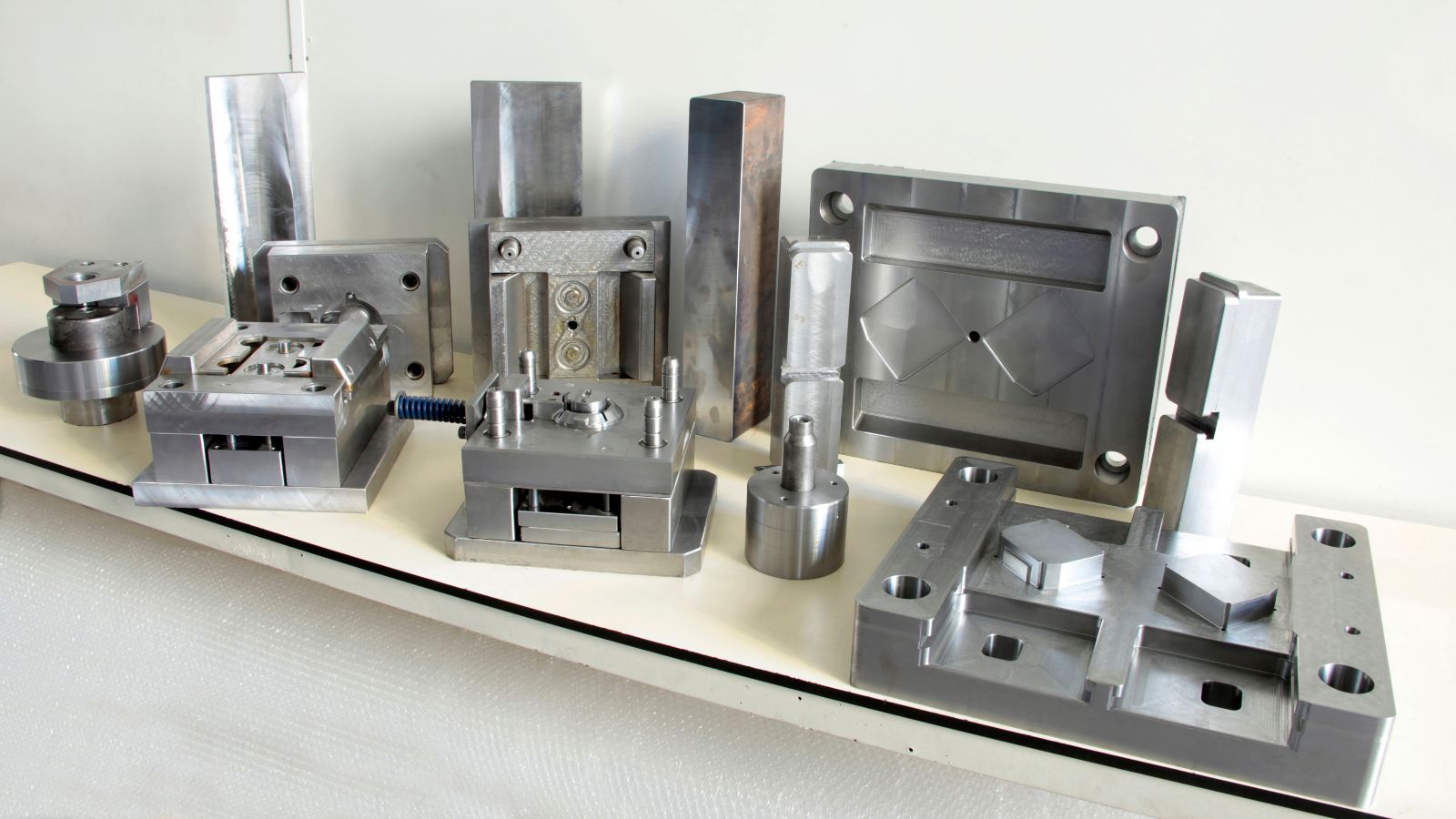
Hardness and Wear Resistance
Hardness measures a steel’s ability to resist surface indentation and deformation.
In injection molding, hardness mainly helps the mold cavity keep its shape under two types of force:
- The clamping force and injection pressure.
- The abrasive wear from glass-filled or mineral-filled plastics
However, extreme hardness can reduce machinability and raise tooling cost. We often balance hardness with ease of machining and polishing to maintain surface finish and dimensional stability.
Toughness and Durability
Toughness describes a steel’s ability to absorb stress without cracking.
Injection molds face repeated mechanical loads, especially at corners, ribs, and thin core pins, and a tough steel can resist such chipping and sudden fracture. This matters in high-cavitation molds or complex designs where stress concentrates in small areas.
Durability depends on both hardness and toughness. A very hard but brittle steel may fail early, while a tougher grade handles shock and pressure better during long production runs.
Good toughness also supports long tool life. It reduces the risk of crack growth over millions of cycles, limiting unplanned downtime for repair.
Thermal Conductivity
Injection molds heat up when molten plastic fills the cavity and cool down during each cycle, and how well the mold stays intact under such fluctuation in molding temperature is heavily dependent on the mold steel.
The deciding pararmeter for the resistance is thermal conductivity, which controls how fast heat moves through the steel. Higher conductivity shortens cooling time and improves cycle efficiency. It also promotes even cooling, which helps maintain part dimensions and surface quality.
Corrosion Resistance and Machinability
Corrosion resistance
Some plastics release corrosive gases during molding, and PVC and flame-retardant materials can attack unprotected steel surfaces. Therefore, corrosion resistance is also vital in preventing rust, pitting, and surface damage.
Corrosion resistance also supports better polish retention. This is important for clear parts or cosmetic surfaces that require a mirror finish.
Machinability
Machinability affects how easily steel can be cut, drilled, and polished. It is a main factor in mold lead time and cost control.
Common Grades of Tool Steel for Plastic Injection Molding
Tool steels for injection molds must balance hardness, toughness, wear resistance, and cost. The grades below represent common tool steels used in mold bases and cavities, each suited to specific resin types and production volumes.
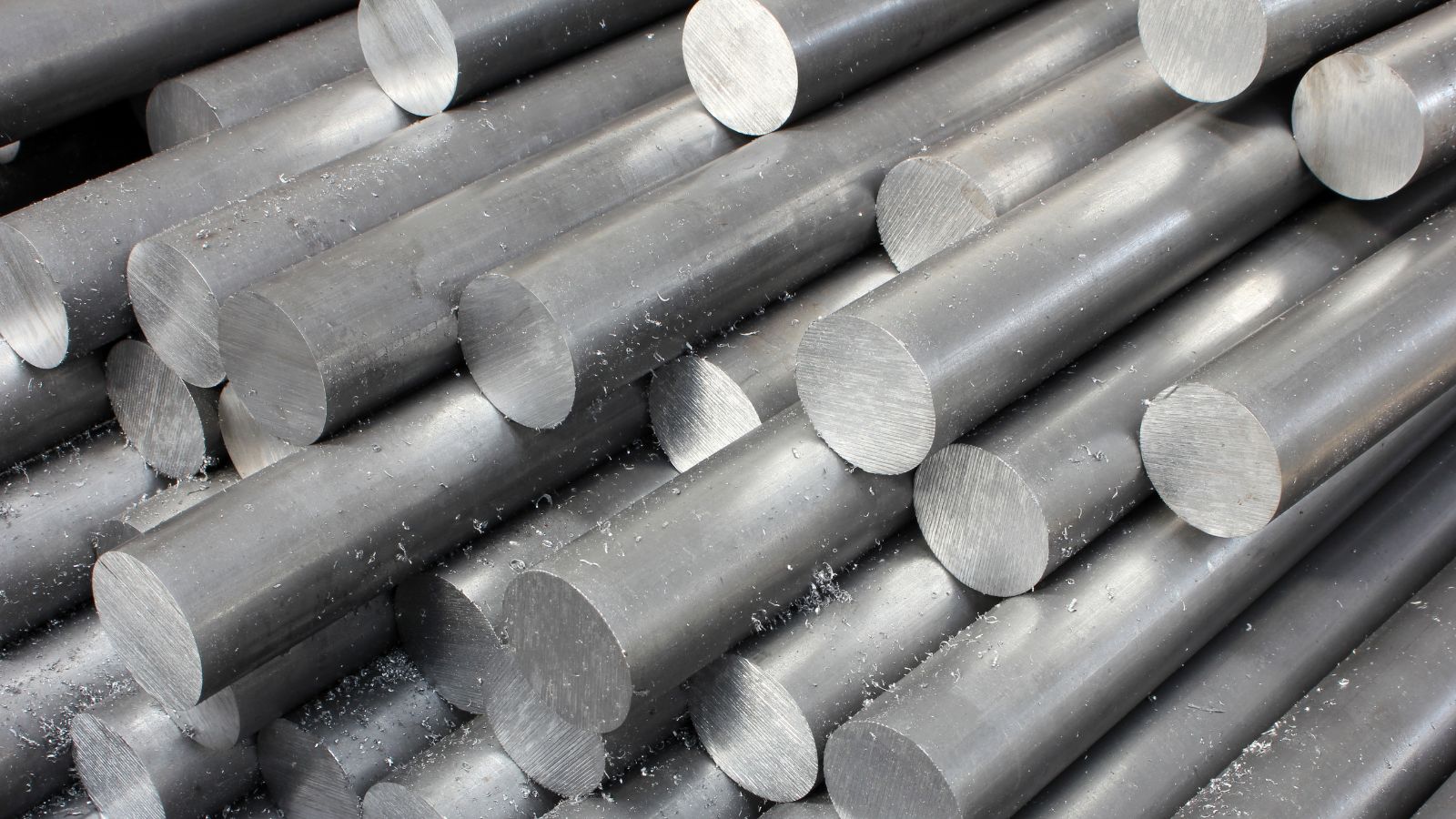
P20 Pre-Hardened Tool Steel
P20 steel is one of the most widely used materials for plastic injection molds. Manufacturers supply it as pre-hardened steel, usually around 28–32 HRC, which removes the need for full heat treatment after machining.
This pre-hardened tool steel offers good machinability and stable dimensions. Toolmakers can cut cavities faster and with lower tooling wear. That makes P20 tool steel a practical choice for shorter lead times and lower tooling budgets.
P20 works well for:
- Low to medium production volumes
- Large mold bases
- Commodity resins such as polypropylene and polyethylene
- Molds with 1–4 cavities
It does not provide the wear resistance of hardened steel like H13. For glass-filled or highly abrasive materials, it may wear faster. Many shops use P20 for prototype tools, bridge tooling, and moderate production runs.
H13 Hardened Tool Steel
H13 tool steel is a through-hardened steel designed for demanding environments. After heat treatment, it typically reaches 48–54 HRC, which gives it strong wear resistance and good strength at high temperatures.
This hardened tool steel handles repeated heating and cooling cycles without cracking easily. It resists thermal fatigue better than many common tool steels. That makes it suitable for high-volume production molds.
H13 is often used when molding:
- Glass-filled plastics
- Engineering resins
- High-temperature materials
- Parts that require millions of cycles
Compared to P20 steel, H13 costs more and requires full heat treatment. Machining takes more time due to higher hardness. However, for long production runs, its durability often justifies the added cost.
420 Stainless Steel
420 stainless steel (420 SS) combines hardness with corrosion resistance. When heat treated, 420 stainless can reach about 48–52 HRC, depending on grade and process control.
This stainless steel resists rust and chemical attack and performs well when molding corrosive resins. Moist environments and water-cooled molds also benefit from its corrosion resistance.
420 SS also polishes to a high surface finish. Mold makers often choose it for:
- Clear plastic parts
- Optical components
- Medical products
- Molds requiring mirror finishes
While it offers good hardness, it may not match H13 tool steel in thermal fatigue resistance. Proper heat treatment and maintenance are critical to prevent distortion or cracking.
S7 Tool Steel
S7 tool steel is known for high impact toughness. It is an air-hardening steel that typically reaches 54–58 HRC after heat treatment.
Unlike some hardened steel grades that focus mainly on wear resistance, S7 emphasizes shock resistance. It handles mechanical stress and sudden loads well. This property makes it useful for slides, lifters, and other mold components that see impact or heavy movement.
S7 offers moderate wear resistance but not the same abrasion resistance as H13. It also lacks the corrosion resistance of 420 stainless steel.
Toolmakers often use S7 for:
- Ejector components
- Core pins under high stress
- Molds with complex moving parts
It is less common for full cavity blocks, but it plays an important role in demanding mold areas where toughness is critical.
Selection Criteria for Mold Tool Steel
Now that we know what features matter and how each type of tool steel performs, it is time to match them with real scenarios and conditions. This chapter will be divided into three parts with charts for easier understanding.
Production Volume and Tool Life
Beyond part count, production volume is also related to expected mold uptime, maintenance intervals, and whether the tool will be used for bridge production or full-scale manufacturing. For large molds, shops often use hardened inserts in high-wear areas while keeping the mold base in a lower-cost steel. This hybrid approach balances cost and tool life without overbuilding the entire tool.
| Production Volume | Recommended Steel | Why |
|---|---|---|
| Low volume (<50,000 shots) | P20 (pre-hardened) | Low cost, fast machining, no heat treatment |
| Medium volume (50k–500k shots) | P20 or 718H | Balance of cost and durability |
| High volume (>1,000,000 shots) | H13, S136 (through-hardened) | High hardness, wear resistance, thermal stability |
Material Compatibility and Abrasive Materials
The plastic resin strongly affects steel selection, because many modern resins contain additives that can alter corrosion behavior or wear characteristics. Matching steel to resin reduces downtime and limits costly repairs. In humid environments, corrosion resistance also protects idle molds between production runs, even when molding non-corrosive resins.
| Resin Category | Examples | Risk | Recommended Steel |
|---|---|---|---|
| Standard resins | PP, PE | Low wear | P20 |
| Engineering resins | PC, PA, POM | High heat, thermal stress | H13 (good hot hardness & fatigue resistance) |
| Filled/abrasive resins | Glass-filled, mineral-filled | Erosion (like sandpaper) | Hardened steel (H13) or surface treatment |
| Corrosive resins | PVC, flame-retardant grades | Gas attack, rust, pitting | Stainless steel (420, S136) |
Surface Finish, Polishability, and Texturing
Part appearance often drives steel choice as much as durability. For textured surfaces (chemical or laser etching), consistent hardness and clean metallurgy help maintain sharp texture detail over long production runs.
| Part Requirement | Steel Needed | Why |
|---|---|---|
| Non-cosmetic / internal parts | Pre-hardened (P20) | Enough machined or light polish finish at lower cost |
| Clear parts, lenses, medical | Stainless (S136, 420) | Polishes to mirror finish (SPI A-1); fine, uniform microstructure |
| Textured surfaces (chemical or laser) | Consistent hardness, clean metallurgy | Holds sharp texture detail over long runs |
How Steel Choice Affects Production Efficiency & Total Cost
Tooling costs are the primary driver behind choosing the right tool steel. Steel selection, together with heat treatment and machining methods, directly shapes mold life and part quality.
Heat Treatment and Hardenability
Steels with strong hardenability achieve uniform hardness even through thick sections. This becomes critical in large molds, where the core must match the surface properties; uneven hardness can lead to cracking or distortion under clamp pressure.
Pre‑hardened grades such as P20 shorten lead time by eliminating the need for full hardening after machining. In contrast, fully hardenable steels like H13 or S136 require controlled quenching and tempering.
Heat treatment also affects how the steel responds to polishing and EDM. Over‑hardened steel may crack during EDM, while steel that is too soft wears quickly in high‑volume runs.
Cycle Times and Efficiency
Mold steel influences cycle times through its thermal conductivity and surface condition. Steel that transfers heat well enables stable cooling and more consistent part dimensions. Short cycles depend on fast, even heat removal: if the steel cools unevenly, the part may warp and the press may require longer hold times, lowering efficiency and raising per‑part cost.
Harder steels resist wear on gates and parting lines, keeping vent depth and shutoff fit within tolerance over many cycles. This stability supports consistent molding conditions and reduces unplanned downtime.
Surface finish also matters: polished cavities lower friction and help parts release faster, which cuts ejection force and allows quicker mold opening without damaging the part. All these factors tie steel choice directly to throughput, scrap rates, and the total cost of production.
Build Your Mold with Moldie Today
Choosing the right tool steel for your plastic injection mold directly impacts cycle times, part quality, and long-term profitability.
Ready to optimize your next injection mold project with the perfect tool steel?
Contact Moldie today – Our experienced engineers will help you select the ideal steel grade for your specific resin, production targets, and budget. From design consultation to finished mold, we deliver precision tooling that performs.