Electroplating is one of the best methods for producing manufactured parts with high-quality surfaces, and it is not just limited to just metal, as ordinary plastic parts can also take on the appearance and some properties of metal through electroplating.
This guide from Moldie will explain to you the principles behind plastic electroplating service, the materials involved, and the methods used across different industries, so you can make sound decisions for your projects and know what to expect when negotiating with your plastic part manufactures.
Differences Between Plating Plastic and Metal
Plating plastics differs from electroplating metals mainly because plastics lack natural conductivity. This chart below sums up their major differences.
| Characteristic | Metal Substrate | Plastic Substrate |
|---|---|---|
| Electrical Conductivity | Naturally conductive | Non-conductive |
| Adhesion Method | Direct metal-to-metal bond | Requires an etched and activated surface |
| Common Base Layers | Nickel, copper | Electroless copper or nickel |
| Risk Factors | Oxidation, surface roughness | Peeling, poor adhesion |
Materials for Plating on Plastic
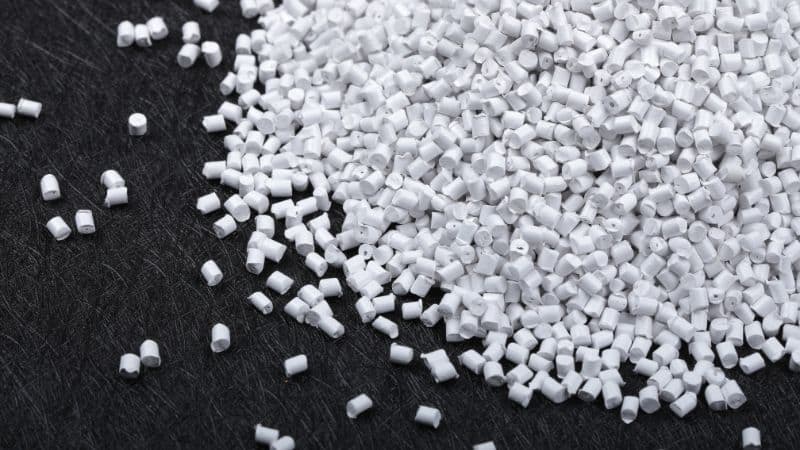
Plastics Commonly Used for Plating
ABS (Acrylonitrile Butadiene Styrene) is the most common electroplating plastic because its butadiene phase allows easy surface etching and strong metal adhesion. It provides a good balance of toughness and heat resistance, making it a standard choice for automotive and consumer parts.
ABS/PC blends combine ABS’s plating ability with the toughness and impact resistance of polycarbonate. This mixture suits parts that require higher strength without reducing surface quality.
Other materials, such as nylon (PA), polypropylene (PP), polyether ether ketone (PEEK), and polyetherimide (PEI), can be plated after surface modification or additive adjustment.
PP and polyethylene (PE) need fillers like talc or calcium carbonate to improve roughness for better adhesion.
PVC and PLA are less suitable due to weaker heat and chemical resistance. For such materials, an adhesive metallic paint can sometimes be used as a decorative alternative, though it will not provide the same durability or conductive properties as electroplating.
| Plastic Type | Plating Ease | Common Use Cases |
|---|---|---|
| ABS | Excellent | Automotive trim, handles |
| ABS/PC | Very Good | Housings, panels |
| Nylon | Moderate | Mechanical parts |
| PP | Low (needs treatment) | Low-weight covers |
| PEEK / PEI | Moderate | High-temperature components |
How to Choose Resins Based on the Features
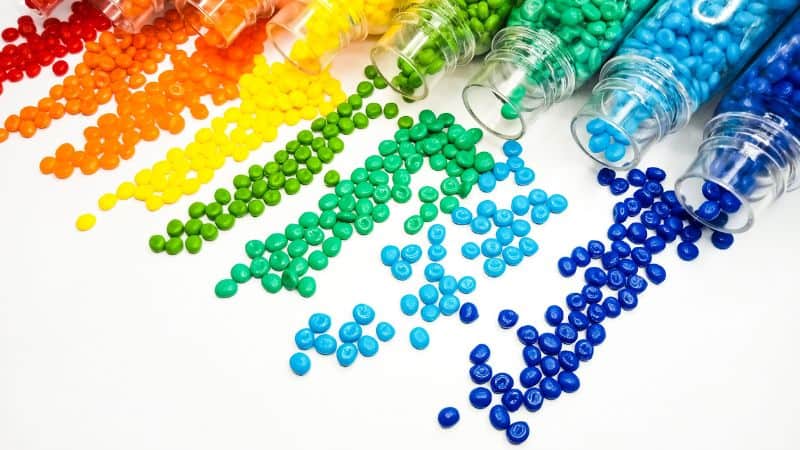
A good plating resin must tolerate harsh chemicals during and cleaning agents during pretreatment.
- ABS is prized for reliability and value. It allows the etching process to create a microscopically rough surface, ensuring the bonds of the metal coating. This translates to high production yields and consistent finishes for automotive trim, appliance handles, and consumer goods.
- Nylon (PA) is a powerful choice when your design demands greater strength, stiffness, or heat resistance. Although moisture absorption may pose a problem, a controlled pretreatment process can still ensure perfect adhesion. The results are strong yet lightweight parts and the functional/decorative benefits of a metal surface.
- PEEK and PEI offer great performance in resisting extreme temperatures and harsh chemicals inherently. It allows you to apply uniform, adherent metallic layers that complement their innate stability, creating parts that are both high-functioning and visually superior.
Influence of Injection Molding and Surface Finish
Injection molding is common practice in plastic parts production, and as the very first step of the whole manufacturing process, its quality affects how well metal adheres to plastic parts during electroplating.
If post-processing is not properly implemented, residual release agents or surface stress can cause peeling or poor adhesion, and uneven shrinkage or warping will change surface energy, affecting where the coating bonds.
To prevent such defects, plastic manufacturers often adopt rigorous quality control to ensure smooth, defect-free surfaces for uniform chemical etching and plating, use clean molds, and avoid mold damage to improve plating outcomes. Any final polishing of the plated surface is also most effective when the underlying plastic substrate is smooth and defect-free.
Preparation & Electroplating Processes for Plastic
Cleaning and Surface Treatment
After being ejected from injection molds, the surfaces of plastic parts often contain mold release agents, grease, and dust that prevent the metal from sticking. The debris is often cleaned with an alkaline solution or mild detergent, or an ultrasonic bath if there are small crevices.
A short neutralization bath follows to eliminate leftover alkalis or acids and keep the surface chemically balanced. Proper cleaning ensures the next chemical stages act evenly, especially on complex shapes or thick-walled components.
Etching and Activating With Chemical Baths
In this step, plastic parts are etched to develop microscopic pores that hold metal firmly so they can develop conductivity. Most industrial etching uses an acid or bath solution to roughen the plastic’s surface.
After etching, the plastic isn’t yet conductive. To prepare it for plating, it goes through two important chemical baths:
-
Sensitizing: The part is treated with a solution that primes the surface, making it ready to attract metal particles.
-
Activating: Next, it’s immersed in a bath containing palladium. A chemical reaction deposits particles of palladium onto the etched surface. These act as the starting points for the metal plating to begin growing.
The part is then thoroughly rinsed to wash away any leftover chemicals, leaving only the anchored palladium seeds behind. This step must be done carefully to keep the active sites intact.
Getting this preparation stage right is crucial. If the etching or activation isn’t even, the final metal coating might be patchy, weak, or prone to flaking. A uniform, well-prepared surface ensures the plating will be strong, consistent, and durable.
Creating a Conductive Surface
Once the surface is activated with palladium seeds, the part is ready to receive its first metal coating—the essential conductive foundation. This is almost always a layer of copper.
This first copper plating layer is applied through electroless plating, a chemical (not electrical) process. The part is immersed in a solution containing copper salts and a reducing agent.
The palladium “seeds” trigger a controlled reaction, causing solid copper to build up particle-by-particle, creating a thin, uniform metal shell over the entire part—even covering complex geometries and internal surfaces that electricity couldn’t reach.
Once the electroless copper layer establishes full conductivity, the part can be moved to a traditional electroplating bath and is now ready for the final electroplating phase.
Electroplating Phase
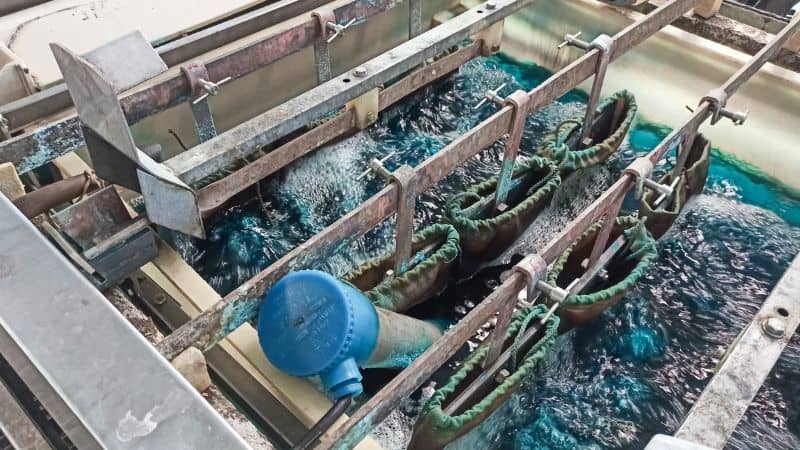
Following surface preparation, the part enters the final plating process. The now-conductive substrate is immersed in electrolyte baths under controlled electrical current for deposition.
Metal ions are reduced at the cathode surface, depositing a dense, uniform metallic layer. Key parameters—current density, bath chemistry, temperature, and immersion time—are precisely calibrated to achieve target thickness and properties.
The quality, thickness, and functional properties of this metallic layer are dictated by a suite of meticulously controlled parameters. This rigorous control ensures the plating achieves the exact target specifications, whether for enhanced corrosion resistance, improved wear characteristics, specific electrical conductivity, or a desired aesthetic finish.